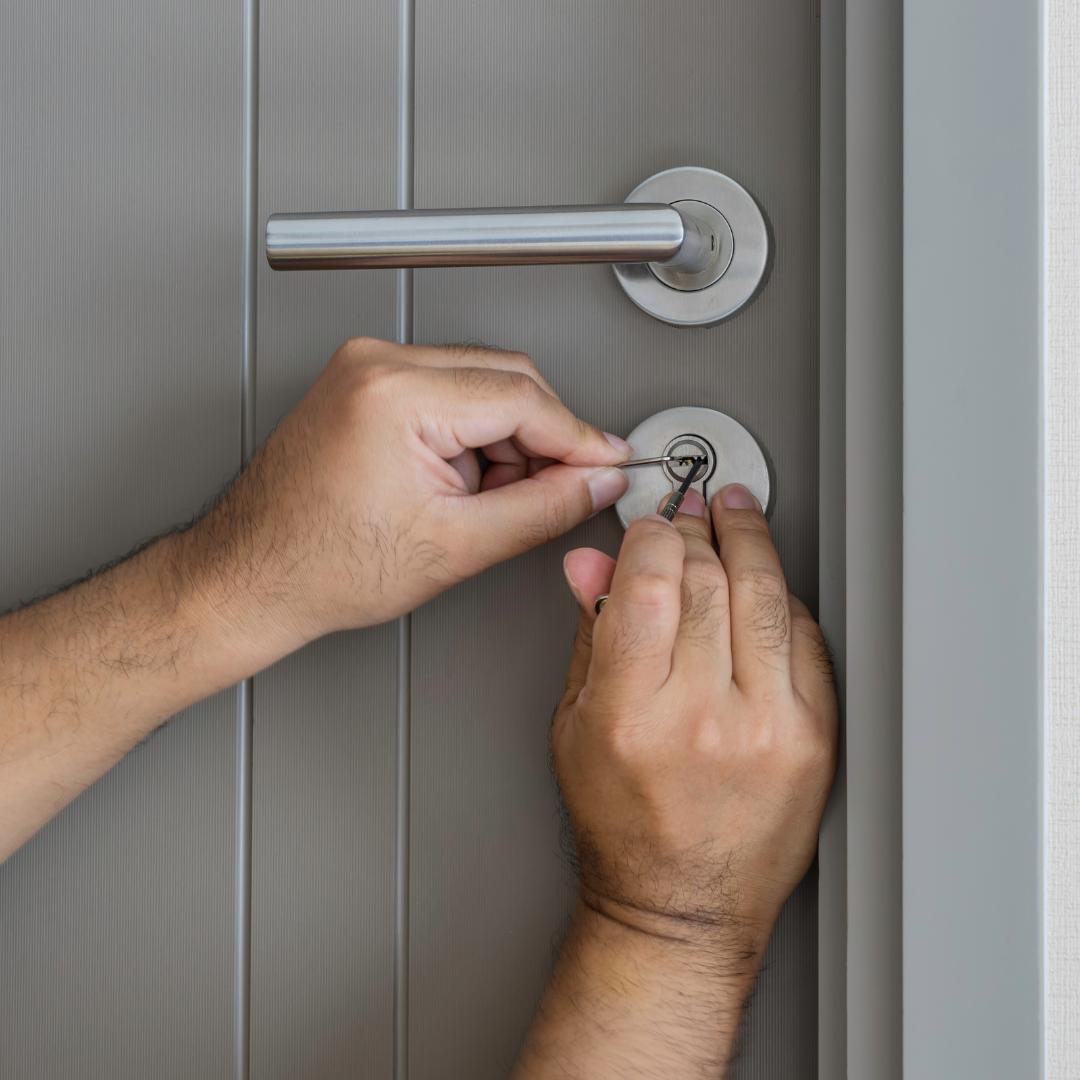
Before recommending anything, we test how your lock actually behaves — where it catches, how much resistance there is, whether it’s the cylinder or the frame. That diagnosis is what separates a lasting fix from a lucky guess.
A lock that’s been struggling for a while doesn’t tend to fix itself. Our Chiswick technicians get to these calls promptly, working out what’s actually wrong before deciding on the right repair.
A struggling lock rarely improves left alone, so we fit Chiswick repair bookings in promptly rather than letting them sit at the bottom of a list.
If your door or frame is genuinely the issue, that’s exactly what gets addressed instead.
Identification comes before any tools come out. Our Chiswick team follows this on every repair, so you always know who’s handling your security.

Chiswick’s proximity to the Parramatta River means slightly higher humidity than inland suburbs, gradually affecting exterior lock components over time. This often results in stiffness or resistance that develops slowly. Our technicians clean and service the mechanism thoroughly. This is especially common in homes closer to the waterfront. Reliable repair restores smooth, dependable operation quickly.
A firm door slam can occasionally knock a strike plate slightly out of position, preventing the bolt from engaging smoothly. This is a commonly overlooked cause of lock trouble. Our technicians identify and correct the alignment issue directly. This is especially common in households with heavier daily door use. Reliable repair resolves the actual root cause quickly.

Many established Chiswick homes still run original locks installed decades ago, gradually accumulating wear that eventually surfaces as stiffness. This is a common, entirely expected situation for older properties. Our technicians service and repair the mechanism as needed. This is especially common in homes that haven’t had any lock maintenance done previously. Reliable repair extends the hardware’s genuine working life.

Fine dirt and grit carried in from nearby parks and walking trails can gradually work into an exposed lock over time. This often results in slow-building resistance that’s easy to overlook at first. Our technicians clean the mechanism thoroughly and properly. This is especially common in locks facing high foot-traffic entry points. Reliable repair restores genuinely smooth function.
A lock that’s started sticking, grinding, or resisting your key doesn’t automatically mean it needs replacing. In a genuine majority of cases across Chiswick, the issue can be properly diagnosed and repaired for a fraction of the cost of new hardware — provided it’s assessed correctly rather than guessed at. This is one of the most common calls we receive, and it’s often resolved far more simply, and far more affordably, than homeowners initially expect.
Open Door Locksmith handles lock repairs across Chiswick’s residential streets, from original hardware on established character homes near the foreshore to newer fittings on recently renovated properties further from the water. This guide covers exactly why locks fail, how to tell whether repair or replacement makes sense, and what a proper repair visit actually involves.
Whether you’ve searched “lock repair near me Chiswick,” “sticky lock fix,” “lock not turning properly,” or “key hard to turn in door,” you’re in the right place.
A key that’s always been a touch stiff isn’t necessarily cause for concern — some locks simply have a slightly firmer action from day one. A key that’s suddenly become noticeably harder to turn over the past week or two, however, usually signals something actively worsening that’s worth addressing before it fails completely. A lock that feels physically loose in the door, wobbling slightly when touched, points toward a hardware or frame issue rather than the internal mechanism, and that distinction genuinely changes what kind of repair is needed.
A rushed assessment hears “the key sticks” and jumps straight to a cylinder replacement without a second thought. A proper diagnosis checks for internal debris, tests alignment against the strike plate, feels for specific points of resistance, and only then decides on cleaning, realignment, component replacement, or full hardware replacement. This methodical approach is what separates a lasting fix from a quick patch that fails again within weeks.
A significant number of “lock problems” are actually door or frame issues in disguise. Established Chiswick homes, particularly the older character properties, can experience gradual settling over decades, and even a small shift can throw a previously well-aligned lock out of sync with its strike plate. In these cases, adjusting the strike plate resolves the issue entirely without needing to touch the lock mechanism at all — a considerably cheaper and simpler fix once correctly identified, and one that a rushed technician might easily miss.
A lock that’s been tampered with can continue turning and locking normally on the surface while carrying genuine internal damage that quietly weakens its actual resistance to a second attempt. Any lock showing signs of tampering — scratches near the keyhole, a slightly bent strike plate — deserves a proper inspection regardless of whether it still seems functional day to day.
Some of the smaller repair jobs matter just as much as the more obvious ones. A strike plate that’s ever so slightly misaligned can make a lock feel faulty even though the lock itself is in good condition, and it’s often a five-minute fix once properly identified. Similarly, a build-up of old, gummed-up lubricant inside a lock can cause exactly the same symptoms as genuine mechanical wear, and a proper clean-out sometimes resolves an issue that would otherwise have been diagnosed as needing a full replacement.
Properties closer to the Parramatta River genuinely experience faster exterior lock wear than those further inland. Metal components that would last for decades in a drier environment can show rust or corrosion considerably sooner here, particularly on doors that face prevailing weather or don’t get much direct sun to help them dry out after rain. If your lock’s giving trouble and you’re noticing discolouration or a gritty feel when turning the key, weather and moisture-related wear is a strong candidate, and it’s the kind of issue a local technician tends to spot quickly.
A proper repair visit should clearly separate the diagnostic component from the actual repair work, so you understand exactly what’s being done and why. It should also involve genuine testing before the technician leaves, not just a verbal assurance that everything’s fixed.
Not every repair call needs to start with an actual problem. Having an ageing lock checked over periodically, particularly if it’s original to an older Chiswick home, can catch developing wear before it becomes a genuine inconvenience. This kind of proactive approach tends to be considerably cheaper over the long run than waiting for a full failure, since early-stage issues are almost always simpler and less expensive to address than a lock that’s already stopped working entirely.
A struggling lock in Chiswick doesn’t automatically mean an expensive new installation. In a genuine majority of cases, careful, well-diagnosed repair restores full, reliable function at a fraction of replacement cost. Open Door Locksmith approaches every repair with honest diagnosis first — checking for debris, testing alignment, identifying the real cause — so the fix you get actually addresses the problem, rather than papering over it for a few weeks before it inevitably comes back again.
Same-Day Appointments Available

Yes, issues like a bolt not fully extending can exist even when the key itself feels fine.
Yes, issues like a bolt not fully extending can exist even when the key itself feels fine.
We can assess both together, since a loose handle sometimes affects how the connected lock engages.
This is worth mentioning, since it may point to a shared cause like humidity or house settling.
Yes, we assess the current state first and can work around or undo a previous attempt if needed.